
Rock & Mulch Maintenance
We don’t simply polish.
We preserve.
Because your lawn deserves better than best.
— Mulch and rock add beauty while helping protect and improve your landscape.
Mulch and rock installations do more than create a clean, polished appearance. These landscaping materials help support healthier plants, reduce maintenance, and improve the overall function of your outdoor space.
The best choice depends on your landscape goals, plant needs, and maintenance preferences. Whether you want better moisture retention, improved weed control, or a low-maintenance design, mulch and rock can provide lasting benefits for your property.
- Mulch helps retain moisture and support healthier plants
- Rock provides a durable, low-maintenance landscape solution
- Mulch helps protect roots and improve soil quality
- Rock helps reduce weeds and define landscape areas
Choosing the right material depends on your property layout, plant selection, and desired level of maintenance. Mulch is ideal for flower beds and areas with trees, while rock works well for pathways, shrubs, and landscapes that require less upkeep.
Our team can help you select the best option for your outdoor space and create a landscape that is both beautiful and functional.
Get a Free Quote
— Common Questions
Common Questions About Rock & Mulch Maintenance

— Saving
How Can Mulch and Rock Installation Save You Money?
Mulch and rock installation can help lower landscape maintenance costs while improving the health and appearance of your property. These materials provide long-term benefits that save time, reduce upkeep, and help manage resources more efficiently. Mulch helps retain soil moisture, reducing the need for frequent watering while improving soil quality as it breaks down over time. Rock offers a durable, low-maintenance solution that helps reduce weed growth and requires less frequent replacement, making it a cost-effective choice for many landscapes.

— Maintenance
How Much Mulch Do You Need for Your Yard?
The amount of mulch your yard needs depends on the size of your planting areas and the desired depth of coverage. Most landscape beds benefit from a 2–3 inch layer of mulch, which helps retain moisture, reduce weeds, and protect plant roots. To determine how much mulch you need, measure the length and width of your garden beds to calculate the total area. From there, the size of the space and the depth of the mulch layer will help determine the amount needed for proper coverage.
— hardscaping
What Types of Rock Are Best for Hardscaping?
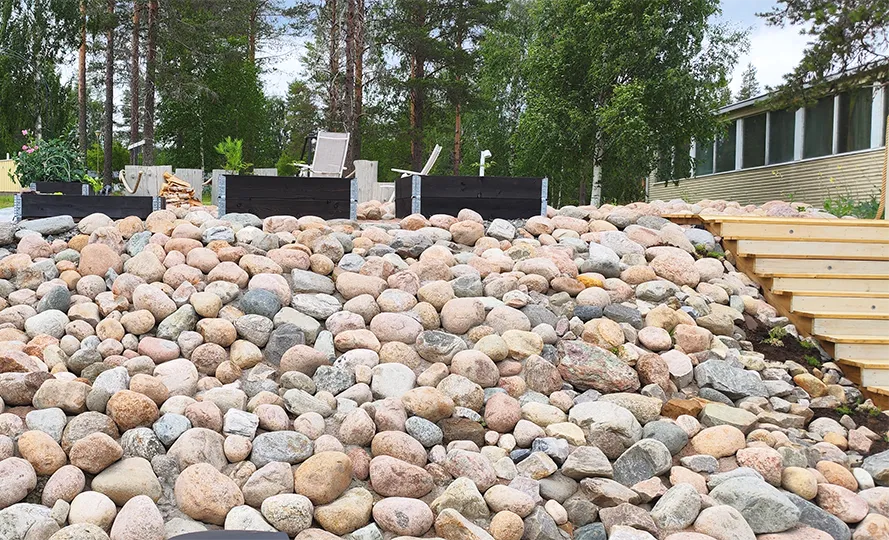
The best type of rock for your landscape depends on how you plan to use it, your design goals, and the overall style of your property. Different rock materials can add beauty, improve functionality, and create defined areas throughout your outdoor space. River rock and pea gravel offer a smooth, natural look that works well around plants, garden beds, and decorative areas. Crushed granite and decomposed granite provide a more stable surface for pathways and high-traffic areas. Larger stones and boulders can also add structure, create focal points, and bring character to your landscape design.

— Combine
Can You Combine Rock and Mulch in Your Landscape?
Yes, combining rock and mulch is a great way to create a balanced, functional, and attractive landscape design. Each material offers unique benefits, allowing you to create outdoor spaces that are easier to maintain while improving the overall appearance of your property. Rock works well for pathways, borders, and areas that need a durable, low-maintenance surface. Mulch is ideal for planting beds because it helps retain moisture, protect plant roots, and improve soil conditions. Using both materials together can add structure, contrast, and long-lasting beauty to your landscape.